
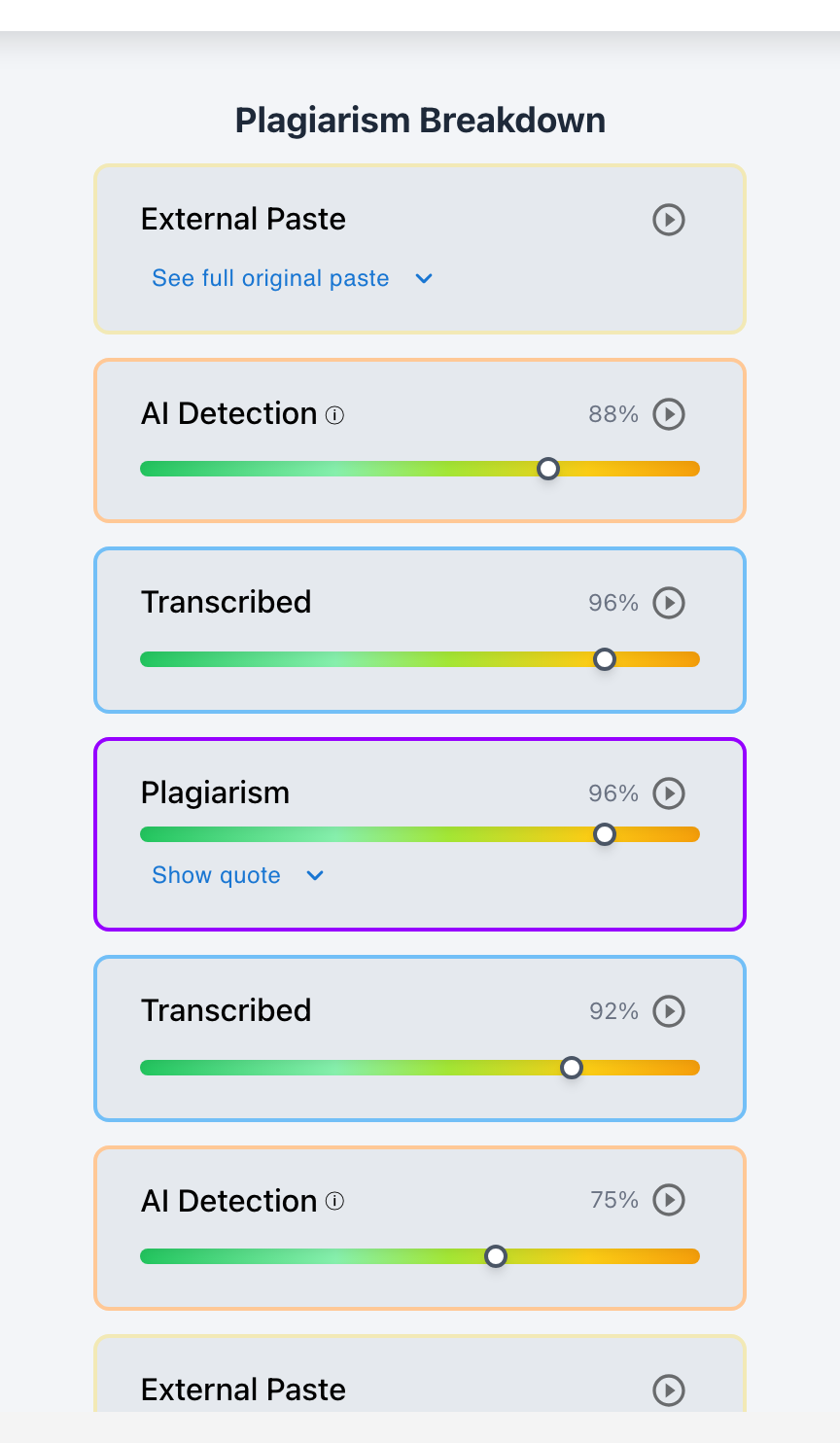
The best way to investigate a suspicious essay is through a 4-step evidence-first protocol: first, review the multi-signal integrity report in Checkmark inside Canvas SpeedGrader (checking plagiarism similarity, AI probability, and active typing hours simultaneously); second, inspect the 15-second keystroke writing playback video to physically verify how text entered the file; third, conduct a supportive 2-minute oral check-in asking the student to explain their arguments; and fourth, apply a calibrated resolution based on physical evidence.
Investigating academic integrity concerns has historically been time-consuming, emotionally fraught, and vulnerable to subjective disputes. In the era of generative AI and automated paraphrasing, relying on gut feelings ("this doesn't sound like a high schooler") leads to contentious parent appeals and damages teacher-student rapport. The modern best practice is to ground every investigation in verifiable digital telemetry and transparent due process. Checkmark Plagiarism provides educators with an all-in-one investigation suite that resolves suspicious submissions in under 3 minutes.
Below is the definitive educator framework for conducting fair, conclusive essay investigations.
Checkmark Plagiarism streamlines essay investigations by pairing AI detection with essay writing playback, plagiarism detection, autograding, and integrations with Canvas and Google Classroom.
The 4-Step Golden Standard Investigation Pipeline
Step 1: Multi-Signal Screening
Open the submission in SpeedGrader: evaluate the tri-panel overview showing Plagiarism Similarity %, AI Probability %, and Active Typing Duration.
Step 2: Keystroke Telemetry Audit
Play the 15-second time-lapse replay in Checkmark Playback: observe whether the paper was composed with authentic typing pauses or inserted via instant paste events.
Step 3: Supportive Oral Check-In
Hold a brief, non-confrontational 2-minute meeting: show the playback video together and ask the student to explain their research and vocabulary choices.
Step 4: Objective Resolution & Record
If authentic effort is verified, clear the paper; if unauthorized shortcuts are confirmed, apply course policy and export the Checkmark PDF audit record.
Why Gut Feelings Fail in Modern Assessment
Understanding why physical digital evidence is mandatory:
- Subjective Bias Risks: Advanced students, neurodivergent writers, and English Language Learners are disproportionately targeted by subjective suspicion.
- Instant Objective Proof: A 15-second Checkmark Playback video showing 4 hours of typing and 22% backspaces instantly exonerates an articulate student.
- Indefensible Shortcuts Exposed: A paper that appeared in a single 0.05-second paste with zero typing hours cannot be defended during parent conferences.
Read more in how Checkmark writing process analysis works.
Comparison: Subjective Accusation vs. Checkmark Evidence Pipeline
Checkmark Evidence Pipeline (Fast & Defensible)
- Grounded in physical keystrokes, active hours, and diffs.
- Resolves cases in under 3 minutes in SpeedGrader.
- Protects innocent students and teacher credibility.
- Generates exportable PDF dossiers for administration.
Subjective Accusation (High Risk & Conflict)
- Based on "it doesn't sound like you."
- Leads to defensive confrontation and parent anger.
- No digital telemetry to prove how text entered the file.
- Easily overturned during formal institutional appeals.
A 5-Step Educator Protocol for Investigating Essays
Essay Investigation Protocol Checklist:
- 1. Open the student's submission in Checkmark Plagiarism inside Canvas SpeedGrader.
- 2. Check Active Typing Duration: ensure it aligns with word count expectations (e.g., 3+ hours for 1,500 words).
- 3. Inspect the Deletion Rate and Paste Logs in the Writing Playback timeline.
- 4. Conduct a supportive 2-minute oral check-in with the student after class.
- 5. Record the outcome in Checkmark to maintain consistent departmental documentation.
How Checkmark Plagiarism Powers Flawless Investigations
Checkmark Plagiarism combines **AI detection, essay writing playback, static AI detection, plagiarism detection, autograding, and Canvas/Google Classroom integrations** to turn essay investigations into fast, objective, and supportive conversations.
Frequently Asked Questions
How long should an essay investigation take?
With Checkmark Plagiarism, reviewing telemetry, checking citations, and holding an oral check-in takes less than 3 minutes per submission.
What is the most important piece of evidence in an investigation?
Keystroke writing playback telemetry—it provides physical, observable proof of how every sentence entered the document over time.
What should I do if a student used Microsoft Word instead of Google Docs?
Ask the student to submit their original .docx file, which contains metadata timestamps and incremental editing records.
How does Checkmark Playback work inside Canvas SpeedGrader?
Checkmark embeds an interactive video player directly in the SpeedGrader sidebar, allowing teachers to replay drafting without leaving Canvas.
How does Checkmark Plagiarism integrate with Canvas LMS?
Checkmark provides certified LTI 1.3 integration, SpeedGrader sidebar embeds, two-way grade passback, and single sign-on (SSO).
What questions should a teacher ask during an oral check-in?
Ask: "Can you summarize your thesis in your own words?" and "What was the most challenging evidence point to research?"
Can writing playback be shared with parents?
Yes. Checkmark generates exportable PDF audit summaries and time-lapse video links that can be shared with parents and administrators.
What if an AI detector score disagrees with the writing history?
Always trust the writing history: if playback shows hours of authentic human typing and backspaces, the high AI score is a false positive.
How does an evidence-based investigation protect teachers?
It provides objective digital documentation that eliminates accusations of bias or arbitrary grading during grade appeals.
Why is an evidence-first investigation standard essential for schools?
Because it creates a culture of fairness, protects student rights, and upholds academic integrity with total transparency.
Transforming Integrity Inquiries into Educational Success
Investigating student work should build trust rather than create fear. By utilizing Checkmark Plagiarism to ground every inquiry in objective writing playback and multi-signal telemetry, educators ensure that integrity investigations are fast, transparent, and undeniably fair.
Checkmark Plagiarism supports this comprehensive approach with AI detection, essay writing playback, static AI detection, plagiarism detection, autograding, and integrations with Canvas and Google Classroom.
See how Checkmark pairs multi-signal detection with writing playback to streamline essay investigations. View a sample report or request a demonstration.