
Yes. Requiring students to submit iterative drafts is one of the most effective pedagogical strategies to foster writing growth, eliminate procrastination, and prevent unauthorized AI cheating.
In traditional single-deadline models—where a student receives an assignment prompt and submits a finished paper weeks later—procrastination, panic, and pressure often drive students to rely on generative AI tools like ChatGPT at the last minute. When educators require scaffolded milestone submissions (e.g., outlines, annotated bibliographies, and rough drafts), the incentive to cheat diminishes dramatically while authentic learning flourishes.
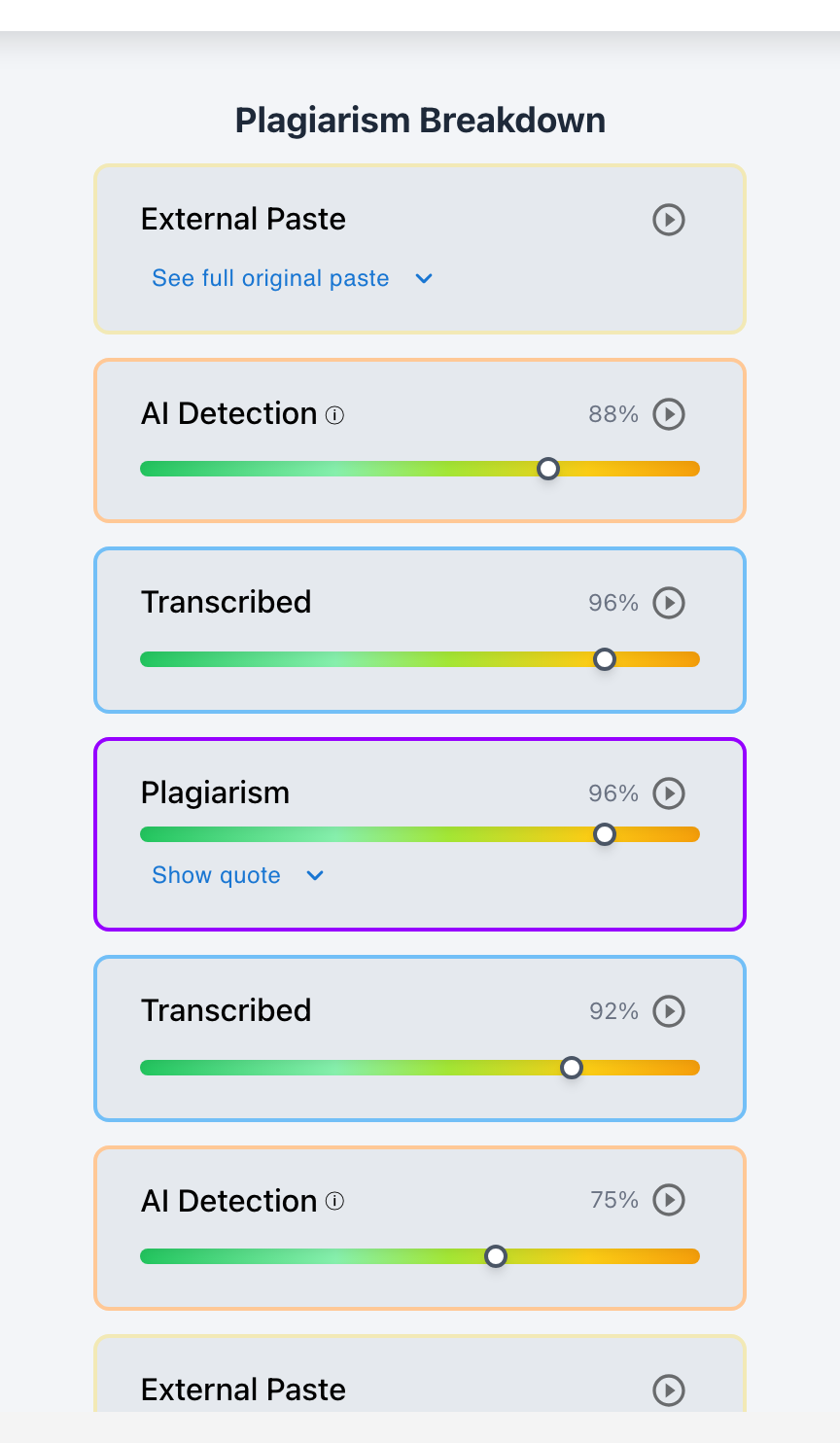
Furthermore, pairing drafting requirements with essay writing playback allows teachers to verify the creation timeline automatically without drowning in mountains of extra grading.
Checkmark Plagiarism streamlines draft verification by combining essay writing playback with AI detection, plagiarism detection, autograding, and integrations with Canvas and Google Classroom.
The 4 Key Benefits of Requiring Draft Submissions
1. Eliminating Last-Minute Panic
Most academic dishonesty is driven by panic, not malice. Scaffolded deadlines force early progress, eliminating midnight crises.
2. Establishing Physical Process Evidence
Drafts provide tangible proof of how arguments evolved, making sudden uncharacteristic jumps in syntax immediately noticeable.
3. Fostering Genuine Revision Skills
Teaches students that writing is an iterative craft of rewriting, reorganizing, and refining rather than a single transactional event.
4. Protecting Honest Students
Provides honest students with an unassailable audit trail of early notes and drafts, protecting them from false accusations.
The Grading Dilemma: How to Manage Drafts Without Burnout
Many teachers hesitate to require drafts because they fear grading 90 rough drafts on top of 90 final essays. However, effective draft management does not require line-by-line teacher grading:
- Low-Stakes Completion Grading: Award full credit simply for having an outline or rough draft submitted on time (e.g., 5 points out of 100).
- Peer Review Workshops: Have students read and critique each other's drafts in class using a structured rubric.
- Automated Writing Playback: Using Checkmark Plagiarism's essay writing playback, instructors can visually review drafting progress and keystroke timelines in seconds without reading every intermediate word.
Read more in how Checkmark writing process analysis works.
Comparison: Single-Deadline Model vs. Scaffolded Drafting Model
Single-Deadline Model (High Risk)
- Student receives prompt → submits final paper 3 weeks later.
- High procrastination, stress, and midnight panic.
- Extremely vulnerable to overnight ChatGPT generation.
- Zero process evidence if academic integrity is questioned.
Scaffolded Drafting Model (Low Risk)
- Milestones: Outline → Annotated Sources → Rough Draft → Final.
- Steady, continuous progress with lower student anxiety.
- Virtually immune to overnight generative AI shortcuts.
- Complete physical audit trail of keystrokes & revisions.
A 4-Milestone Drafting Schedule for Educators
Recommended 3-Week Scaffolded Schedule:
- Week 1 (Day 4): Thesis Proposal & Working Outline (5% of grade).
- Week 2 (Day 8): Annotated Bibliography with 3 Verified Academic Sources (10% of grade).
- Week 2 (Day 12): Complete Rough Draft for In-Class Peer Review (10% of grade).
- Week 3 (Day 18): Final Polished Essay + Writing Playback Log (75% of grade).
How Checkmark Plagiarism Automates Draft Verification
Checkmark Plagiarism combines **AI detection, essay writing playback, static AI detection, plagiarism detection, autograding, and Canvas/Google Classroom integrations** to make draft verification effortless, tracking multi-session writing timelines automatically inside your LMS.
Frequently Asked Questions
Does requiring drafts prevent students from using ChatGPT?
Yes. Because students must submit outlines and early drafts over multiple weeks, the temptation to generate an entire paper overnight with ChatGPT is largely eliminated.
How can teachers grade drafts without increasing their workload?
Grade drafts on a low-stakes complete/incomplete basis, utilize peer review rubrics, and use Checkmark writing playback to verify progress at a glance.
What if a student submits a ChatGPT-generated rough draft?
Writing playback logs, lack of active drafting time, and citation audits will expose the AI generation at the draft stage, allowing early intervention before final grading.
Can students use AI to generate outlines and rough drafts?
Writing playback tracks active keystrokes and wholesale paste events, making it immediately clear whether an outline was drafted manually or pasted from AI.
How does draft history protect students from false AI accusations?
Early notes, outlines, and multi-session draft histories provide undeniable proof of authentic student thought and developmental progress.
What should a teacher do if a student submits a final paper with no drafts?
Review the writing playback timeline, check for wholesale paste events, and invite the student to discuss their drafting choices in a conference.
Should draft submission policies be included in the syllabus?
Yes. Clearly state that submitting rough drafts is a mandatory component of the assignment and that papers without draft histories may require an oral defense.
How does peer review support the drafting process?
Peer review gives students immediate feedback, reinforces audience awareness, and ensures that classmates read and discuss each other's ideas before final submission.
Can Checkmark Plagiarism track multiple drafts in Canvas?
Yes. Checkmark Plagiarism integrates seamlessly with Canvas SpeedGrader, tracking writing playback across all draft stages automatically.
What if a student drafts offline in Microsoft Word?
Instruct students to submit their initial Word files with version history or paste early drafts into the LMS during milestone checkpoints.
Scaffolding Protects the Integrity of Writing
Requiring drafts transforms writing from a high-stakes, panic-inducing deadline into an authentic intellectual journey. By celebrating iterative development and tracking creation timelines with essay writing playback, educators defend academic rigor while empowering student growth.
Checkmark Plagiarism supports this comprehensive approach with AI detection, essay writing playback, static AI detection, plagiarism detection, autograding, and integrations with Canvas and Google Classroom.
See how Checkmark pairs essay writing playback with multi-signal detection to make draft verification effortless inside your LMS. View a sample report or request a demonstration.