
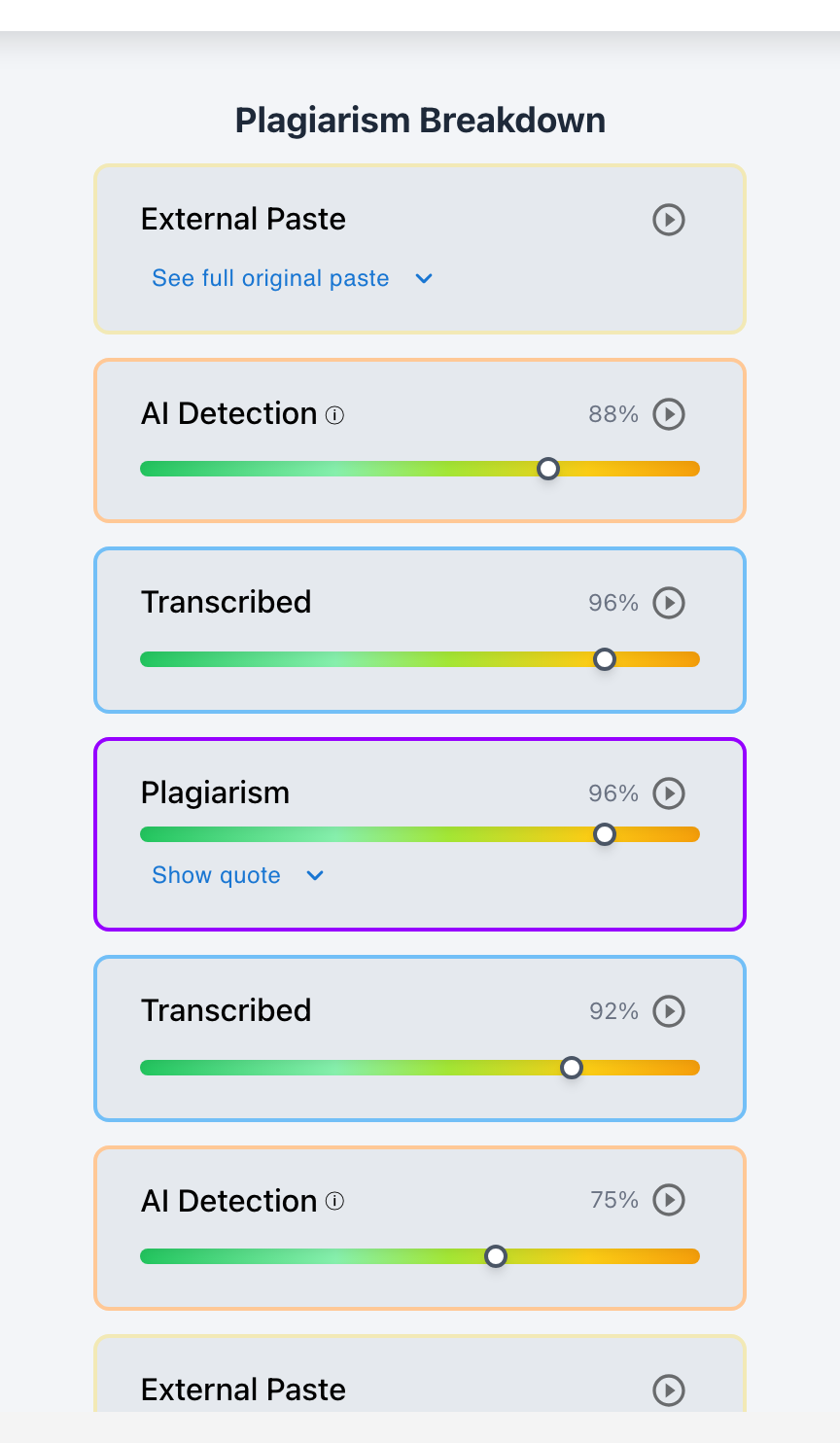
Teachers should investigate peer-to-peer plagiarism through a 4-stage, evidence-first framework: first, collect multi-signal telemetry in Checkmark (analyzing side-by-side text matches and keystroke creation timestamps); second, determine origin authorship by comparing active drafting hours against clipboard paste events; third, conduct separate, private student conferences using objective video replay as a neutral reference; and fourth, compile an exportable audit dossier for school administration to ensure full student due process.
Investigating academic dishonesty between classmates is often emotionally charged. When two friends submit identical paragraphs, teachers are frequently caught in the middle of conflicting stories, accusations of theft, or mutual denial. Without objective data, these disputes devolve into frustrating "he-said-she-said" stalemates that strain classroom relationships. Grounding the inquiry in verifiable writing process telemetry eliminates emotional guesswork, protects innocent students whose work was taken without consent, and establishes clear institutional accountability.
Below is a comprehensive educator protocol for conducting fair, rigorous peer-to-peer plagiarism investigations.
Checkmark Plagiarism powers peer investigations by pairing plagiarism detection with AI detection, essay writing playback, autograding, and integrations with Canvas and Google Classroom.
The 4 Stages of a Defensible Peer Plagiarism Investigation
Stage 1: Multi-Signal Data Collection
Pull the Checkmark Peer Match report in Canvas SpeedGrader: examine passage-level match clusters, excluded prompt noise, and submission timestamps.
Stage 2: Telemetry Origin Determination
Compare both students' Writing Playback side-by-side: verify active typing duration, deletion rates, and keystroke creation dates to identify the original composer.
Stage 3: Independent Private Conferences
Hold brief 2-minute separate meetings with each student: ask specific conceptual questions and show their individual writing playback replay.
Stage 4: Administrative Documentation
Export the Checkmark PDF audit summary containing timeline comparison graphs and video links to document policy enforcement for administration and parents.
How to Structure Separate Student Conferences
Conducting effective, non-adversarial student meetings:
- Keep Students Strictly Separated: Interviewing students together creates peer pressure, where one student may intimidate the other or both agree to a rehearsed story.
- Use Playback as an Objective Mirror: Say: "Let's take a look at your document timeline in Canvas together. I noticed this 400-word passage entered the document in a single paste event. Can you explain where this was drafted?"
- Test Conceptual Knowledge: Ask: "Can you summarize the main argument of this paragraph in your own words?" The true author explains immediately; the copier falters.
Read more in how Checkmark writing process analysis works.
Comparison: Subjective Inquiry vs. Evidence-First Peer Investigation
Evidence-First Peer Investigation (Checkmark Standard)
- Grounded in keystroke creation timestamps and telemetry.
- Identifies author vs. copier conclusively in minutes.
- Protects innocent students whose work was copied.
- Generates legally defensible PDF audit dossiers.
Subjective Inquiry (High Conflict & Uncertainty)
- Relies on "he-said-she-said" arguments and submission order.
- Risks penalizing both students equally, harming the victim.
- High conflict during parent and administrative appeals.
- No digital telemetry to prove how the text entered files.
A 5-Step Educator Protocol for Peer Plagiarism Inquiries
Peer Investigation Protocol Checklist:
- 1. Open the Peer Similarity Match card in Checkmark Plagiarism inside Canvas SpeedGrader.
- 2. Review the Side-by-Side Playback Replay: check active drafting hours and backspaces for both students.
- 3. Schedule two separate 2-minute private conferences back-to-back.
- 4. Show each student their individual playback replay and assess conceptual ownership.
- 5. Export the Checkmark PDF investigation dossier and submit it to the honor code council or gradebook.
How Checkmark Plagiarism Powers Peer Investigation Forensics
Checkmark Plagiarism combines **AI detection, essay writing playback, static AI detection, plagiarism detection, autograding, and Canvas/Google Classroom integrations** to turn peer plagiarism disputes into transparent, objective, and fair resolutions.
Frequently Asked Questions
What is the most reliable way to prove who copied from whom?
Checkmark Playback proves origin by comparing active drafting hours, backspace ratios, and keystroke creation timestamps between both files.
Should teachers confront both students in the same room?
No. Always interview students separately; separate meetings prevent collusion narratives and allow the real author's authentic knowledge to shine.
What if both students claim they wrote the paper together on a call?
If the task was an individual assignment, co-writing constitutes unauthorized collaboration (collusion); Playback will show shared phrasing appearing synchronously.
How does Checkmark protect an innocent student whose paper was stolen?
By capturing their full multi-hour drafting telemetry and early creation timestamps, Checkmark provides unassailable proof of their honest labor.
How does Checkmark Plagiarism integrate with Canvas LMS?
Checkmark provides certified LTI 1.3 integration, SpeedGrader sidebar embeds, two-way grade passback, and single sign-on (SSO).
Can writing playback be shared with parents during disciplinary appeals?
Yes. Checkmark exports side-by-side PDF audit dossiers including video replay links and keystroke telemetry charts.
What questions should a teacher ask to test conceptual ownership?
Ask: "What was the main reason you chose this specific quote in paragraph 3?" and "Can you explain what this word means in context?"
What is the difference between peer plagiarism and collusion?
Peer plagiarism is taking a classmate's work without permission or credit; collusion is unauthorized mutual cooperation on an individual assignment.
How long does a typical peer investigation take with Checkmark?
Because keystroke telemetry and side-by-side match cards provide immediate clarity, most peer investigations are resolved in under 10 minutes.
Why is due process essential in academic integrity cases?
Because fair investigations protect student rights, ensure equitable discipline, and maintain community trust in academic standards.
Integrity, Empathy, and Justice in Academic Grading
Resolving peer plagiarism requires balancing rigor with empathy. By grounding every inquiry in objective keystroke playback and side-by-side telemetry with Checkmark Plagiarism, educators ensure that the truth is revealed, innocent students are protected, and academic integrity is upheld with total fairness.
Checkmark Plagiarism supports this comprehensive approach with AI detection, essay writing playback, static AI detection, plagiarism detection, autograding, and integrations with Canvas and Google Classroom.
See how Checkmark pairs peer submission matching with writing playback to investigate peer-to-peer plagiarism. View a sample report or request a demonstration.