
In Doctor of Veterinary Medicine (DVM) clinical training, veterinary technology curricula, and post-graduate clinical internships/residencies, clinical case writeups and daily SOAP (Subjective, Objective, Assessment, Plan) medical records represent the core pedagogical bridge between biomedical theory and autonomous animal patient care. Under American Veterinary Medical Association Council on Education (AVMA-COE) Standard 11 (Clinical Competencies), veterinary teaching hospitals and clinical preceptors must objectively certify that candidates possess independent clinical reasoning, rigorous physical examination skills, species-specific pharmacological safety judgment, and defensible medical documentation before entering licensed practice.
However, the proliferation of Large Language Models (LLMs) has introduced a profound clinical hazard: synthetic veterinary SOAP notes. Generative AI readily produces fluent, textbook-sounding case summaries that frequently mask lethal diagnostic and therapeutic hallucinations—such as feline acetaminophen administration, canine NSAID-corticosteroid co-prescriptions without washout periods, inverted fluid deficit calculations, and impossible clinicopathologic correlations (e.g., diagnosing intrinsic renal failure while reporting hypersthenuric urine specific gravity).
Legacy AI text detectors fail veterinary educators entirely: they trigger rampant false positives on standardized veterinary clinical shorthand (BAR, QAR, WNL, NSF, CRT <2s, BCS 5/9, CBC, chem-17, FeLV/FIV, HW-, SID, BID, TID, QID, IV, PO, SC, IM) while completely missing fabricated clinical logic and fatal dosing errors. To protect animal patient safety and uphold accreditation standards without resorting to punitive guesswork, academic veterinary institutions are implementing a 5-Phase Veterinary Clinical Telemetry Audit Protocol. By coupling practice management system (PMS) and analyzer telemetry with Checkmark’s patent-pending Essay Playback™ (1x–8x keystroke replay), External Paste Inspection, and teacher-controlled rubric autograding, clinical faculty can reconstruct the student's authentic cognitive drafting workflow, distinguish authentic diagnostic synthesis from unvetted AI generation, protect honest students, and cultivate life-saving clinical judgment.
Checkmark Plagiarism delivers health sciences and veterinary medical colleges an integrated, zero-data-retention evidentiary suite for forensic writing telemetry, passage-level confidence evaluation, and direct LMS synchronizations across Canvas LMS, Agilix Buzz, and Google Classroom.

1. The High-Stakes Imperative: Veterinary Clinical Rotations & AVMA-COE Accreditation
The transition from preclinical didactic coursework to the clinical rotation year represents the most rigorous phase of veterinary medical education. Within university Veterinary Teaching Hospitals (VTH), ambulatory field services, and accredited private specialty preceptor networks, fourth-year clinical veterinary students (senior clinicians) manage real companion, equine, exotic, and food animal patients under the direct supervision of licensed clinical faculty (DVM/VMD) and board-certified specialists (DACVIM, DACVS, DACVECC, DACVAA, DABVP).
- Species, breed, age & reproductive signalment
- Chief complaint & chronological HPI
- Environmental, toxin & herd management history
- Full TPR, CRT, MM color & hydration %
- Body Condition Score (BCS 1–9) & Muscle Score
- Systematic 12-system anatomical organ palpation
- Point-of-care (PCV/TP, lactate, blood gas, AFAST/TFAST)
- CBC, Serum Chemistry-17 & Complete Urinalysis
- Digital radiography, ultrasonography & serology
- Prioritized master problem list formulation
- DAMNIT-V pathophysiological rule-in / rule-out
- Differential hierarchy justification
- Species-specific pharmacology (mg/kg to mL conversions)
- Fluid deficit calculations (Maint + Deficit + Losses)
- Multimodal analgesia, surgical plan & anesthesia protocol
- In-hospital ICU serial vitals, lactate & re-evaluations
- Client communication, VCPR & financial navigation
- Home discharge instructions & contemporaneous record
The AVMA-COE Standard 11 Mandate
The American Veterinary Medical Association Council on Education (AVMA-COE) establishes strict accreditation criteria for all veterinary medical colleges in North America and accredited international institutions. AVMA-COE Standard 11 (Outcomes Assessment & Clinical Competencies) specifically mandates that every graduating veterinarian must independently demonstrate core clinical competencies across nine critical domains:
- Comprehensive Patient Assessment: Gathering and interpreting accurate medical histories, environmental management data, and signalment across diverse animal species.
- Diagnostic Decision-Making: Formulating prioritized, pathophysiologically sound differential diagnoses and selecting appropriate, cost-effective diagnostic tests.
- Disease Management & Therapeutic Strategy: Designing and implementing medical, surgical, and supportive treatment plans tailored to patient status and species physiology.
- Anesthesia, Pain Management, and Patient Welfare: Safely managing general anesthesia, regional analgesia, and acute/chronic pain control.
- Emergency and Intensive Care Triage: Rapidly assessing and stabilizing critically ill or traumatized animal patients.
- Medical Record Integrity & Legal Documentation: Maintaining accurate, professional, and contemporaneous medical records in compliance with state Veterinary Practice Acts.
- Biosecurity, Zoonotic Disease, and Population Health: Recognizing infectious risks, implementing biosecurity containment, and reporting regulatory pathogens.
- Client Communication & Ethical Judgment: Communicating transparently with animal owners, navigating financial constraints, and maintaining the Veterinarian-Client-Patient Relationship (VCPR).
- One Health Integration: Understanding the nexus between animal welfare, human health, and environmental ecosystems.
Legal, Regulatory, and Malpractice Weight of Veterinary Records
Veterinary medical records are not merely academic homework; in clinical practice and university teaching hospitals, they are legal documents governed by:
- State Veterinary Practice Acts: Requiring contemporaneous, truthful recording of clinical findings, medications administered, and rationales for care.
- Animal Medicinal Drug Use Clarification Act (AMDUCA) of 1994: Regulating legal extra-label drug use (ELDU) in animals, which strictly requires a valid VCPR, documented diagnostic justification, and species-appropriate withdrawal intervals in food-producing animals.
- Drug Enforcement Administration (DEA) Compliance: Mandating strict documentation and audit trails for Schedule II–V controlled substances (e.g., fentanyl, ketamine, buprenorphine, midazolam, butorphanol).
The Rise of Synthetic Veterinary SOAP Notes
Under the intense cognitive and physical pressure of 80-hour clinical rotation weeks, emergency overnight shifts, high patient case loads, and continuous rounds, veterinary students face significant charting burdens. The advent of accessible generative AI tools (such as ChatGPT, Claude, and Gemini) has created an unprecedented vulnerability: outsourced diagnostic writing.
Students frequently paste raw triage snippets or patient signalment into an LLM, prompting it to “Generate a complete SOAP note with DAMNIT-V differential diagnoses and a treatment plan for a 7-year-old canine presenting with acute vomiting.” While the resulting document reads with textbook fluency and academic prose, it frequently severs the essential connection between the real, living patient observed on the exam table and the diagnostic logic submitted for academic grading.
When faculty grade a synthetic SOAP note without verifying the student's authentic drafting and diagnostic reasoning process, two disastrous outcomes emerge:
- Unidentified Competency Deficits: Students pass clinical rotations without possessing the independent diagnostic problem-solving skills required to manage life-or-death veterinary emergencies autonomously.
- Unchecked Clinical Hallucinations: AI models invent physiological data, hallucinate laboratory test correlations, and propose lethal pharmacological interventions that directly contradict animal physiology.
2. Anatomy of Veterinary Clinical SOAP Documentation & The AI Hallucination Threat
To evaluate student case writeups rigorously, clinical faculty and preceptors must understand the exact four-part architecture of veterinary SOAP documentation and recognize the distinctive physiological and pharmacological failure modes of generative AI.
• Complete Signalment: Species, Breed, Age, Sex & Reproductive Status (e.g., 5yo FS DSH).
• Chief Complaint & Chronology: Owner narrative, onset, waxing/waning timeline.
• Environmental/Preventive: Diet (raw/grain-free), indoor/outdoor, travel, vaccines, parasite prophylaxis, toxin exposure.
• Triage Vitals: Temperature, Pulse/HR, Respiration, CRT (<2s), MM color, Hydration %.
• Body Scoring: Body Condition Score (BCS 1–9) & Muscle Condition Score (MCS).
• Systemic Findings: Cardiovascular, Respiratory, Abdominal, Orthopedic, Neuro, Derm, Ophthalmic.
• Problem Prioritization: Master problem list arranged by acuity and life threat.
• DAMNIT-V Differentials: Degenerative, Anomalous, Metabolic, Neoplastic, Infectious, Toxic, Vascular.
• Rule-Ins & Rule-Outs: Specific pathophysiological justifications linked to findings.
• Diagnostic Plan: CBC, Chem-17, UA, AFAST/TFAST, Radiography, CT, Serology.
• Therapeutics: Species-safe pharmacology (mg/kg to mL), routes (IV/SC/PO), dosing intervals.
• Fluid Therapy Math: Maintenance + Deficit + Ongoing Losses. ICU monitoring & client discharge.
Part 1: Subjective (S) — Signalment, History, and Environmental Context
The subjective section anchors the medical record in the patient's individual biological and environmental profile:
| Signalment Element | Clinical Significance & Breed Predisposition Examples |
|---|---|
| Species | Canine, Feline, Equine, Bovine, Caprine, Avian, Exotic. Governs fundamental metabolic pathways (e.g., feline glucuronidation deficiencies). |
| Breed Predispositions |
• Cavalier King Charles Spaniel: Myxomatous Mitral Valve Disease (MMVD). • Doberman Pinscher: Dilated Cardiomyopathy (DCM) & Von Willebrand Disease. • Collies & Australian Shepherds: ABCB1 / MDR1 gene mutation (avermectin/loperamide neurotoxicity).• Boxers: Arrhythmogenic Right Ventricular Cardiomyopathy (ARVC) & Mast Cell Tumors (MCT). |
| Sex & Reproductive Status | Intact Male, Castrated Male (MN/MC), Intact Female, Spayed Female (FS). Crucial for reproductive emergencies (Pyometra, BPH/prostatitis, dystocia, testicular neoplasia). |
| Environmental & Travel History | Travel to endemic mycosis zones (Coccidioides, Blastomyces, Histoplasma) or tick-borne vector regions (Borrelia, Ehrlichia, Anaplasma); diet (raw pathogens, grain-free nutritional DCM); toxin access. |
Part 2: Objective (O) — Physical Examination, Triage Metrics, and Diagnostic Feeds
The objective section records verifiable clinical measurements and structured physical examination findings across every major organ system:
- Temperature (T): Rectal temp (°F/°C). Distinguish hypothermia vs hyperthermia vs pyrexia.
- Pulse / Heart Rate (P/HR): Rhythm, strength (bounding vs thready), auscultation sync vs pulse deficits.
- Respiration (R/RR): Rate (brpm), effort (eupneic, tachypneic, dyspneic, orthopneic, paradoxical).
- CRT & MM Color: CRT <2s (normal), >3s (vasoconstriction/poor perfusion), <1s (hyperdynamic shock). MM Pink (normal), Pale (anemia/shock), Icteric (hemolysis/hepatic), Cyanotic (hypoxemia), Injected/Brick Red (sepsis/SIRS), Muddy/Brown (methemoglobinemia).
- Hydration Assessment: <5% (subclinical), 5–6% (tacky MM), 7–8% (decreased skin turgor, sunken eyes), 10–12% (severe tenting, hypovolemic shock), >12% (moribund).
- Cardiovascular: Murmur grading (Grade I–VI / VI), Point of Maximal Intensity (PMI), rhythm.
- Respiratory: Lung auscultation (crackles, wheezes, friction rubs, absent ventral sounds).
- Gastrointestinal/Abdomen: Palpation (soft, non-painful vs cranial pain, fluid wave, organomegaly, intestinal plication/foreign body).
- Neurological: Mentation (BAR, QAR, obtunded, stuporous, comatose), Cranial Nerves I–XII, conscious proprioception, spinal reflexes, neuro-localization.
- Musculoskeletal & Pain: Lameness scoring (AAEP 1–5 equine, canine 1–5), Glasgow Composite pain score.
Part 3: Assessment (A) — Diagnostic Problem Prioritization & DAMNIT-V Differential Scheme
The assessment section is the intellectual core of the veterinary record. Senior clinicians must translate disorganized raw symptoms into a prioritized problem list and construct comprehensive differential diagnoses using the standardized DAMNIT-V scheme:
Degenerative Joint Disease (DJD), Tracheal Collapse, Canine Cognitive Dysfunction, Hip Dysplasia.
Portosystemic Shunt (PSS), Subaortic Stenosis (SAS), Persistent Right Aortic Arch (PRAA), Hydrocephalus.
Diabetic Ketoacidosis (DKA), Hepatic Lipidosis, Hypoadrenocorticism (Addison's), Hypercalcemia.
Lymphoma, Hemangiosarcoma, Mast Cell Tumor, Taurine deficiency DCM, Thiamine deficiency encephalopathy.
Leptospirosis, Parvovirus, IMHA / ITP, Acute Pancreatitis, FIP, Blastomycosis, Diskospondylitis.
Ethylene Glycol, Anticoagulant Rodenticide, Lilies (feline), Hit-By-Car (HBC), Gastric Dilatation-Volvulus (GDV).
Feline Aortic Thromboembolism (FATE / “Saddle Thrombus”), Pulmonary Thromboembolism (PTE), Systemic Hypertension, Ischemic Stroke.
Part 4: Plan (P) — Diagnostic Workup, Therapeutics, and Fluid Calculations
The plan translates diagnostic hypotheses into actionable clinical and surgical management:
- Diagnostic Tiering: Immediate point-of-care diagnostics (PCV/TP, blood glucose, blood gas, lactate, AFAST/TFAST), comprehensive laboratory profiling (CBC, Serum Chemistry-17 panel, Urinalysis with microscopic sediment examination), diagnostic imaging (three-view thoracic radiographs, abdominal ultrasound, CT), and specialty serology/PCR (e.g., 4Dx Plus SNAP test, FeLV/FIV ELISA, cPL/fPL SNAP, resting cortisol).
- Therapeutic Protocol & Species-Specific Pharmacology: Precise dosing formulated in milligrams per kilogram (
mg/kg), specifying exact administration volume (mL), drug concentration (mg/mL), anatomical route (IV,IM,SC,PO), and dosing frequency (SID,BID,TID,QID,CRI). - Rigorous Fluid Therapy Deficit Calculations:
Maintenance (mL/day) = 70 × (Body Weight in kg)^0.75Maintenance (mL/day) = (30 × BW in kg) + 70 (or 60 mL/kg/day dog, 45 mL/kg/day cat)Deficit (mL) = Body Weight (kg) × (% Dehydration expressed as decimal) × 1000 mL/kg3. The Dangerous Reality of AI Hallucinations in Veterinary Clinical Records
When veterinary students outsource SOAP writeups to generic LLMs, the models generate fluent text that frequently contains critical, species-specific errors that would prove lethal in clinical practice.
- • Feline Acetaminophen Toxicity: LLMs recommend acetaminophen (10–15 mg/kg) for febrile cats. Cats lack hepatic glucuronyl transferase (UGT1A6); toxic NAPQI metabolite causes lethal methemoglobinemia, Heinz body hemolytic anemia, facial edema, and hepatic failure.
- • Canine NSAID + Steroid Co-Prescription (Zero Washout): AI models combine prednisone with carprofen or meloxicam. Dual COX/phospholipase A2 inhibition causes massive GI ulceration, intestinal perforation, septic peritonitis, and renal papillary necrosis. A mandatory 5-to-7 day washout period is required.
- • Permethrin in Cats: Confusing canine topicals with feline products causes prolonged neuronal sodium channel opening, leading to severe tremors, seizures, hyperthermia, and death.
- • Ivermectin in ABCB1/MDR1 Mutants: AI prescribes high-dose avermectins to Collies/Aussies without screening; non-functional P-glycoprotein pump causes central neurotoxicity, coma, and respiratory arrest.
- • Fluoroquinolone Retinal Toxicity: Enrofloxacin >5 mg/kg/day in felines causes acute, irreversible retinal degeneration and permanent blindness.
- • Azotemia vs. Urine Specific Gravity (USG): AI diagnoses Acute Intrinsic Kidney Injury (AKI) while reporting a USG of 1.048 (or >1.040 in cats). A hypersthenuric USG proves intact tubular concentrating ability (Prerenal Azotemia / dehydration), whereas intrinsic AKI produces isosthenuria (1.008–1.012).
- • Addisonian Crisis (Na:K Disconnect): AI diagnoses acute Hypoadrenocorticism while reporting normal electrolytes (Na+ 145 mEq/L, K+ 4.2 mEq/L; Na:K ratio 34.5:1). Mineralocorticoid deficiency produces diagnostic Na:K ratios <27:1 (often <20:1).
- • Anemia Dynamics: AI labels PCV 14% as “non-regenerative anemia of chronic disease” while listing 185,000/μL reticulocytes and marked polychromasia (which represents robust bone marrow regeneration).
- • Shock Boluses in Congestive Heart Failure: AI models prescribe 60–90 mL/kg canine shock fluid boluses to patients presenting with tachypnea and crackles secondary to mitral valve disease, triggering fatal fulminant pulmonary edema.
- • Exponential Deficit Miscalculations: Misplacing decimal points during percentage dehydration calculations, resulting in 10x overdoses (e.g., prescribing 6,800 mL instead of 680 mL over 24 hours).
- • “Soft, Non-Painful Abdomen” in GDV / Septic Peritonitis: Copying generic exam boilerplate into surgical acute abdomen cases.
- • Mentation Contradictions: Documenting “BAR (Bright, Alert, Responsive)” in the vitals summary while describing a comatose or stuporous head-trauma patient in the neurological narrative.
4. The Clinical Judgment & AVMA Accreditation Dilemma
When veterinary faculty suspect that a student's SOAP note or clinical case defense was generated by AI, they face a critical evidentiary barrier.
The Generic Detector Failure: Opaque AI detectors flag this record as 92% AI-Generated because standardized clinical shorthand has ultra-low lexical perplexity and uniform sentence length. Honest students are falsely accused.
The Generic Detector Failure: Paraphrased prose easily passes traditional AI checkers with a 0% AI score, yet contains a lethal feline pharmacological prescription and unverified clinical reasoning.
Why Generic AI Percentage Detectors Fail Veterinary Medicine
- Standardized Clinical Shorthand Triggers False Positives: Veterinary medical documentation is intentionally terse, formulaic, and standardized. Standard acronyms and physical examination boilerplate (
BAR,QAR,WNL,NSF,CRT <2s,MM pink,BCS 5/9,CBC,chem-17,FeLV/FIV neg,HW-,USG 1.025,SID,BID,TID,QID,IV,PO,SC,IM,PRN) exhibit extremely low perplexity and uniform sentence length. Legacy detectors flag these authentic clinical summaries as “85%–95% AI-generated,” unfairly penalizing conscientious students. - Zero Clinical Comprehension: Generic detectors evaluate syntax, not medicine. An essay detector cannot recognize that prescribing meloxicam and dexamethasone simultaneously will cause fatal gastrointestinal perforation, nor can it identify that a reported fluid rate will induce pulmonary edema.
- The Black-Box Accusation Trap: Accusing a fourth-year veterinary student of academic dishonesty based on an opaque percentage score damages faculty-student rapport, triggers adversarial grievance hearings, and fails to provide actionable evidentiary “receipts.”
5. The Veterinary Clinical Evidentiary Matrix
To evaluate student case writeups objectively, veterinary colleges must transition from black-box percentage scores to a multi-dimensional evidentiary framework:
| Evidentiary Dimension | Paper Travel Sheets & Traditional Charting | Generic AI Percentage Detectors | Checkmark Writing Process Telemetry & Essay Playback™ |
|---|---|---|---|
| Evidence Type | Static paper notes or un-timestamped EHR text entries | Opaque whole-document probability score (e.g., “88% AI”) | Deterministic, timestamped keystroke telemetry and timeline replay |
| Diagnostic Drafting Verification | Relies on retrospective faculty memory of what occurred on the clinic floor | Zero insight into drafting history or cognitive effort | Reconstructs drafting keystroke-by-keystroke (1x–8x speed) showing clinical thought pauses |
Handling of Veterinary Shorthand (BAR, WNL, CRT <2s) |
Accepted as standard professional communication | High false-positive rate due to repetitive, low-perplexity clinical terminology | Shorthand is contextualized within authentic typing rhythm; honest <150w N/A guardrail |
| Pharmacological Dosing Verification | Manual faculty double-check of math in clinic | Completely blind to dosing errors or species contraindications | Captures real-time calculation drafting, formula revisions, and dosage adjustments |
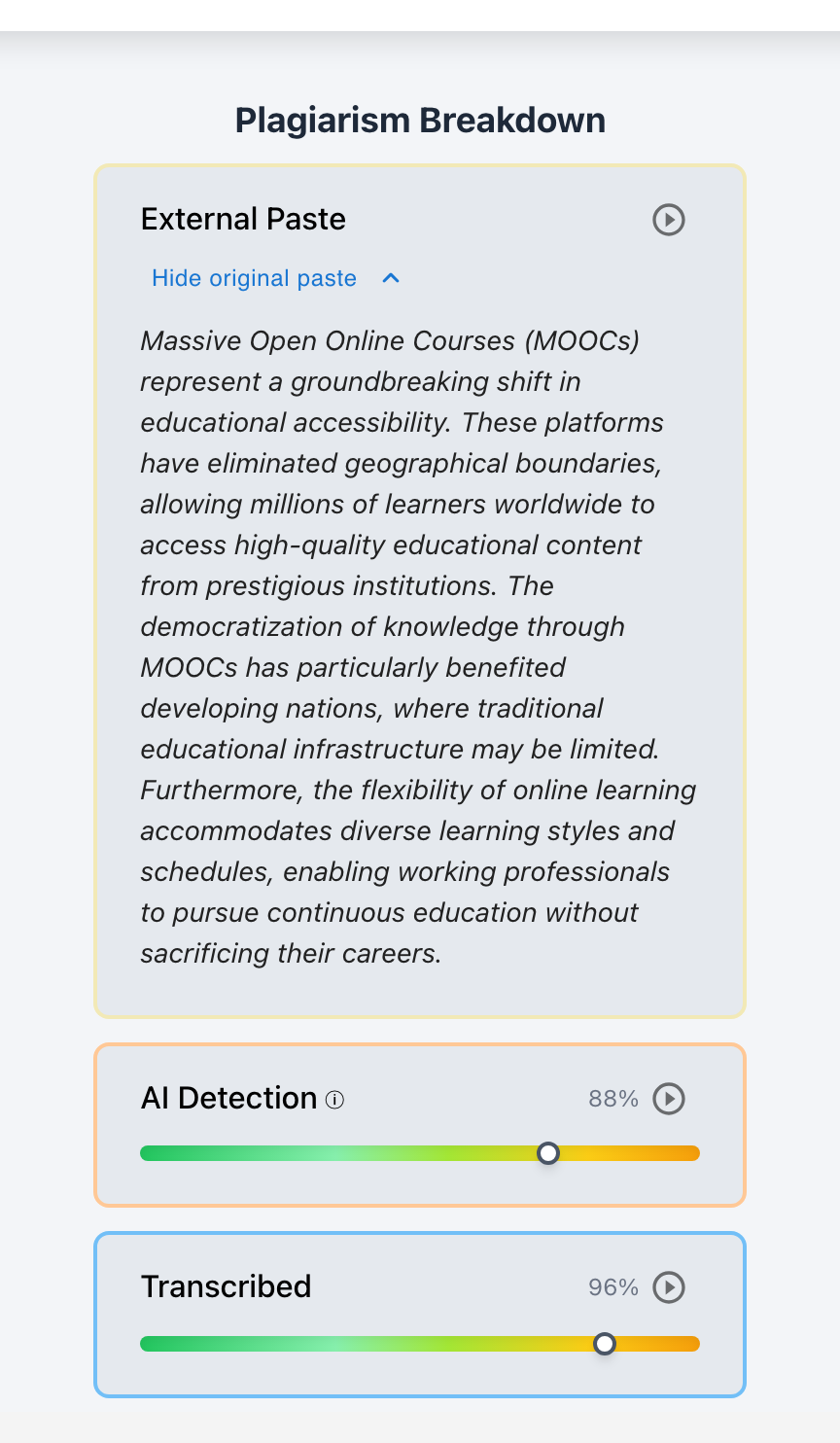
| External Paste & Clipboard Tracking | Undetectable if submitted via digital portal | Flags pasted text only if the synthetic phrasing matches statistical models | Preserves raw clipboard contents, timestamps paste events, and links directly to playback timeline |
| Transcription Detection (Second Screen / Phone) | Undetectable | Completely blind to manual retyping from generative AI screens | Flags steady typing velocity lacking organic pauses, deletions, or clinical revisions |
| Student Exoneration Capability | Difficult to prove independent thought post-submission | Incapable of proving innocence; forces adversarial denials | Provides undeniable visual proof of authentic student drafting and clinical reflection |
| Accreditation & Audit Defensibility (AVMA-COE) | Vulnerable to subjective grading challenges | Non-defensible in academic appeal or accreditation review | Fully defensible, exportable audit dossier meeting institutional standards |
6. The 5-Phase Veterinary Faculty Audit Protocol
To maintain high academic and clinical standards, veterinary teaching hospitals and clinical preceptor programs can implement this standardized 5-Phase Clinical Telemetry Audit Protocol:
Cross-reference student writeup against Cornerstone / ezyVet / Merlin PMS patient records. Match reported vitals, CBC, Chem-17, and imaging reports directly to raw diagnostic analyzer feeds (IDEXX ProCyte Dx/Catalyst One, Heska Element HT5, Zoetis VetScan VS2).
Screen therapeutic plan for lethal species contraindications (feline acetaminophen, permethrin). Verify mandatory 5–7 day washout periods (NSAIDs vs corticosteroids), ABCB1/MDR1 dosing safety, and continuous rate infusion (CRI) calculation integrity.
Replay student drafting session at 1x–8x speed using Checkmark Essay Playback™. Verify authentic cognitive pauses during DAMNIT-V synthesis and fluid deficit calculations; identify instantaneous external text pastes or steady, unpaused transcription typing.
Inspect sidebar evidence cards and passage-level calibrated confidence sliders. Verify citations against ACVIM, ACVECC, AAEP, and ISCAID clinical consensus guidelines using Checkmark Two-Pane Source Proof.
Review playback timeline collaboratively with the student during clinical rounds. Assess underlying clinical reasoning, remediate knowledge gaps, and uphold professional trust and patient safety.
Phase 1: Electronic Practice Management (PMS) & Diagnostic Analyzer Concordance Checks
Before evaluating the student's written analysis, faculty confirm that objective data aligns with clinical reality:
- PMS Telemetry Concordance: Compare the student's recorded TPR, body condition score, and physical exam findings against the hospital's practice management software (e.g., IDEXX Cornerstone, ezyVet, Merlin, StringSoft, Covetrus Pulse).
- Laboratory Analyzer Feed Matching: Cross-reference reported hematology and biochemistry values with raw diagnostic printouts from in-house analyzers (e.g., IDEXX ProCyte Dx / Catalyst One, Heska Element HT5, Zoetis VetScan VS2). Check for discrepancies where a student copied textbook values rather than the patient's actual lab results.
Phase 2: Species-Specific Pharmacology & Safety Verification
Faculty conduct a targeted safety screen across the therapeutic plan:
- Species Appropriateness: Verify that all prescribed drugs, routes, and dosages are approved or scientifically validated for the target species. Confirm zero feline acetaminophen or permethrin recommendations.
- Washout and Interaction Verification: Confirm that sequential anti-inflammatory protocols include appropriate 5–7 day washout intervals.
- Calculation Integrity: Double-check math for continuous rate infusions (CRIs), fluid therapy deficits, and emergency drug dosages (
mg/kg → mL).
Phase 3: Writing Process Telemetry & Cognitive Pause Analysis with Essay Playback™
Using Checkmark Essay Playback™, faculty replay the student's writing session at 1x to 8x speed:
- Authentic Diagnostic Drafting: Characterized by variable typing velocity, natural composing pauses (e.g., 60–120 second pauses while calculating fluid requirements or reviewing lab values), frequent line revisions, and word substitutions as the student refines their differential diagnoses.
- External AI Pasting: Characterized by large blocks of text appearing in a single timestamped event (0 milliseconds). Checkmark's External Paste Inspector captures the raw clipboard text and provides a direct jump-to-timeline button.
- Mechanical Transcription (Retyping from an AI Prompt): Characterized by an unnaturally steady typing velocity (e.g., 60–80 WPM) maintained continuously without backspaces, corrections, or reflective pauses.
Phase 4: Granular Passage-Level AI & Literature Grounding Review
Rather than relying on whole-document probability scores, faculty inspect Checkmark's Passage-Level Confidence Sliders:
- Targeted Evidence Cards: Checkmark underlines specific diagnostic passages and displays evidence cards in the sidebar, comparing typical human clinical drafting patterns against known AI linguistic markers.
- Short-Text Guardrails: Brief clinical entries (
<150 words) display an honestN/Aguardrail to prevent false positives on standard abbreviations. - Consensus Literature Matching: Checkmark’s two-way linked plagiarism viewer scans academic repositories, comparing student citations against established guidelines from the American College of Veterinary Internal Medicine (ACVIM), American College of Veterinary Emergency and Critical Care (ACVECC), American Association of Equine Practitioners (AAEP), and International Society for Companion Animal Infectious Diseases (ISCAID).
Phase 5: Restorative Clinical Judgment & Case Defense Conference
When anomalies appear in the telemetry report, faculty hold a supportive, non-adversarial clinical conference during rotation rounds:
- Focus on Patient Welfare and Learning: Frame the meeting around diagnostic reasoning and patient safety rather than punitive misconduct allegations.
- Collaborative Timeline Review: Sit side-by-side with the student and review the Checkmark Essay Playback™ timeline. Ask the student to walk through their clinical thought process during specific drafting pauses.
- Restorative Clinical Remediation: If the student utilized an unvetted AI tool due to fatigue or time pressure, use the encounter to demonstrate how the AI generated lethal pharmacological errors. Require the student to re-work the diagnostic and therapeutic plan under direct faculty mentorship.
7. How Checkmark Empowers Veterinary Medical Colleges & Preceptors
Checkmark Plagiarism delivers an integrated, educator-controlled platform designed specifically for the rigorous evidentiary demands of health sciences and veterinary medical education:
Reconstructs the student's entire drafting process keystroke-by-keystroke. Visualizes authentic cognitive pauses during fluid calculations and DAMNIT-V synthesis.
Preserves the raw, unmodified clipboard string for any external paste event—even if the student subsequently rewrote every single word.
Evaluates specific diagnostic sentences with calibrated confidence indicators rather than arbitrary whole-document percentage scores. Honest <150w N/A guardrail.
Generates draft rubric evaluations anchored directly to student clinical prose, with seamless one-click score passback to Canvas, Buzz, and Classroom.
Student records, medical history writeups, and proprietary teaching hospital clinical cases are never retained or used to train commercial AI models. Fully compliant with FERPA and institutional data privacy mandates.
8. Realistic Clinical Rotation Case Scenarios
The following scenarios illustrate how Checkmark’s multi-dimensional telemetry resolves common clinical integrity dilemmas in veterinary teaching hospitals:
Patient & Presentation: 5-year-old male intact German Shepherd presenting for acute non-productive retching, restlessness, and progressive cranial abdominal distension.
The student submitted a 1,200-word emergency SOAP note outlining severe acute gastritis. In the therapeutic plan, the note recommended administering metoclopramide (0.5 mg/kg SC) as an antiemetic prokinetic and discharging with oral rehydration.
Patient & Presentation: 10-year-old female spayed Domestic Short Hair (DSH) presenting with open-mouth breathing, tachypnea (RR 68 brpm), and muffled ventral lung sounds.
A beautifully formatted SOAP note diagnosing feline asthma and recommending acetaminophen (15 mg/kg PO) for hyperthermia, along with an albuterol inhaler. The note completely omitted emergent thoracocentesis for pleural effusion.
Patient & Presentation: 12-year-old Thoroughbred gelding presenting with acute abdominal pain (pawing, flank watching, heart rate 64 bpm, borborygmi absent in all four quadrants).
A legacy AI detector flagged the student’s case writeup as 89% AI-Generated due to standard equine shorthand (HR 64 bpm, borborygmi 0/4, reflux 8L net green/sour, peritoneal tap TP 3.2 g/dL, WBC 4,500/μL).
9. Frequently Asked Questions (FAQ)
1. Why do standardized veterinary abbreviations trigger false positives on traditional AI detectors?
Standardized veterinary abbreviations (such as BAR, QAR, WNL, NSF, CRT <2s, MM pink, BCS 5/9, CBC, chem-17, SID, BID, TID, QID) are concise, predictable, and repetitive. Legacy AI detectors calculate perplexity and burstiness across general text; because clinical shorthand has low linguistic variation, generic tools misinterpret standard medical formatting as synthetic AI text. Checkmark eliminates this flaw by analyzing the real-time keystroke drafting timeline and providing honest <150 word guardrails.
2. Can Essay Playback™ distinguish between typing while looking at a second screen versus authentic writing?
Yes. When a student composes authentically, their keystroke dynamics display natural variation: bursts of drafting, pauses of 30 to 120 seconds while reviewing lab results or calculating drug dosages, and frequent backspaces, deletions, and structural revisions. Conversely, when a student mechanically transcribes text generated on an external phone or second monitor, they type at an unnaturally continuous, uniform velocity with almost zero backspacing, formula revisions, or diagnostic deliberations.
3. How does Checkmark handle student medical notes composed inside practice management systems (PMS)?
Checkmark integrates seamlessly via browser extensions and LMS integrations (e.g., Canvas, Buzz, Google Classroom). When students compose case writeups, grand rounds presentations, or rotation portfolios within these environments, Checkmark records full keystroke telemetry and paste history.
4. What is the difference between an AI percentage score and Checkmark's passage-level evidence cards?
Generic AI detectors generate an arbitrary whole-document score (e.g., “78% AI”) that provides no actionable evidence or context. Checkmark highlights specific passages within the text and provides individual evidence cards with calibrated confidence sliders, allowing faculty to evaluate the exact clinical context of each sentence.
5. How does Checkmark ensure compliance with student data privacy and veterinary hospital confidentiality?
Checkmark maintains a strict Zero Data Retention architecture: student case submissions and clinical documents are never used to train public or commercial AI models. The platform complies fully with FERPA, institutional data security mandates, and enterprise cloud encryption standards.
6. How should clinical preceptors introduce writing telemetry to veterinary students?
Faculty should present telemetry transparently as a protective, professional tool. Explain that writing process verification serves to protect students from false AI accusations, validate their clinical effort, and ensure that patient care documentation meets the high standards required for licensed veterinary practice under AVMA-COE guidelines.
Conclusion: Stop Guessing, Start Trusting in Veterinary Clinical Education
Veterinary medicine demands uncompromising clinical judgment, species-specific pharmacological precision, and authentic diagnostic problem-solving. While generative AI provides valuable study tools, unvetted synthetic SOAP notes pose an existential threat to clinical competency assessment and animal patient welfare.
By replacing opaque AI detectors with Checkmark Plagiarism’s multi-dimensional evidentiary suite—combining patent-pending Essay Playback™, External Paste Inspection, and teacher-in-the-loop autograding—veterinary medical colleges can uphold AVMA-COE Standard 11 competencies, eliminate adversarial false accusations, and foster the next generation of skilled, compassionate, and trustworthy veterinarians.
Ready to Elevate Clinical Integrity in Your Veterinary Program?
Discover how Checkmark Plagiarism protects clinical rotations, provides patent-pending keystroke replays, and syncs seamlessly with Canvas LMS, Agilix Buzz, and Google Classroom.