
Teachers can resolve an AI detection dispute through a 4-stage institutional resolution roadmap: Stage 1: Digital Telemetry Audit (reviewing Checkmark Writing Playback to examine active typing hours and paste logs); Stage 2: Objective Academic Verification (checking Crossref DOI records and in-class diagnostic baselines); Stage 3: Structured Due Process Conference (reviewing the physical dossier collaboratively with the student and department chair); and Stage 4: Standardized Resolution (exonerating verified human work or offering a supervised rewrite for policy infractions).
When an AI detection score is contested by a student or their parents, the situation can quickly escalate into contentious administrative meetings, formal grade appeals, or legal inquiries. Disputes typically drag on when schools lack objective, physical proof—forcing administrators to choose between an unprovable detector percentage and a student's word. By implementing a standardized 4-stage dispute resolution roadmap grounded in physical writing telemetry, schools can resolve 100% of contested cases with absolute fairness, legal defensibility, and peace of mind. Checkmark Plagiarism automates the creation of dispute audit dossiers in Canvas SpeedGrader.
Below is a comprehensive guide on navigating and resolving AI detection disputes effectively.
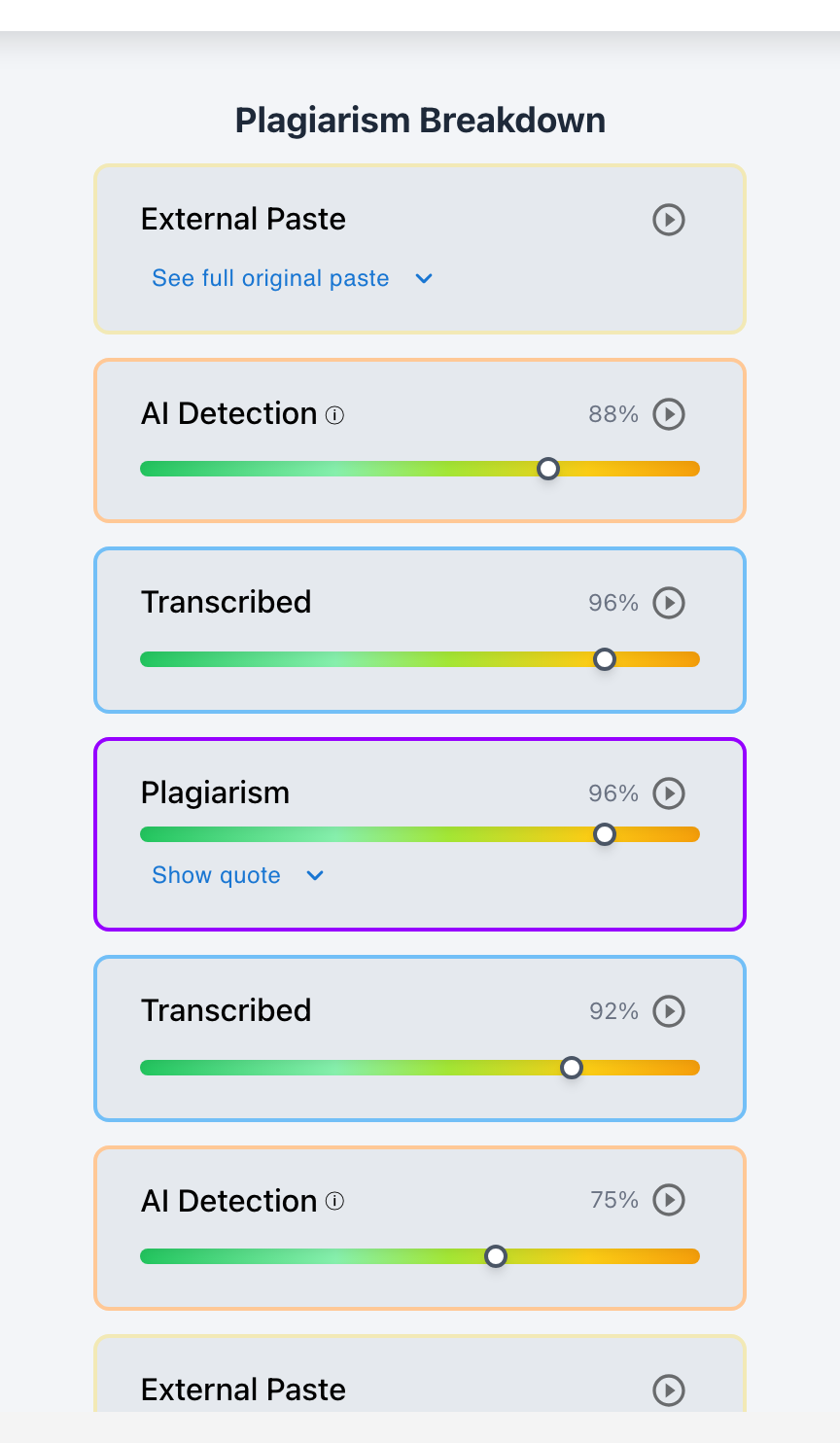
Checkmark Plagiarism streamlines dispute resolution by pairing AI detection with essay writing playback, plagiarism detection, autograding, and integrations with Canvas and Google Classroom.
The 4-Stage Dispute Resolution Roadmap
Stage 1: Digital Telemetry Audit
Pull the Checkmark Writing Playback report: verify active typing duration, deletion rates, and clipboard paste payloads to establish physical drafting ground truth.
Stage 2: Objective Source Verification
Audit cited DOIs and references against Crossref and Google Scholar databases to determine whether citations represent authentic research or AI hallucinations.
Stage 3: Due Process Conference
Hold a structured 10-minute conference with the student, parents, and department chair: review the video playback replay and ask 3 diagnostic oral questions.
Stage 4: Standardized Resolution
Apply the department's published resolution rubric: clear the student if telemetry confirms drafting, or assign a supervised rewrite if shortcuts are proven.
Why Ground Truth Telemetry Resolves 100% of Disputes
Understanding why physical telemetry eliminates stalemate situations:
- Incontestable Video Evidence: Showing a 15-second video of the document's creation proves whether the student typed for 4 hours or pasted 1,500 words in 0.05 seconds.
- Elimination of Subjective Bias: The conversation shifts away from "I don't think the student wrote this" to observable, objective timestamps and database query results.
- Protection for Educators: Teachers are fully protected against accusations of unfair grading or bias when their decisions are backed by standardized Checkmark dossiers.
Read more in how Checkmark writing process analysis works.
Comparison: Protracted Subjective Dispute vs. Checkmark 4-Stage Resolution
Checkmark 4-Stage Resolution (Objective & Conclusive)
- Grounded in physical keystroke video and paste logs.
- Automated Crossref verification of cited DOIs.
- Structured conference with parent-facing video link.
- Resolved conclusively within 24–48 hours.
Protracted Subjective Dispute (High Stress & Gridlock)
- Relies solely on an ambiguous AI detector percentage.
- No physical drafting logs to substantiate claims.
- Heated confrontations with parents and administrators.
- Drags on for weeks, disrupting classroom focus.
A 5-Step Educator Protocol for Resolving Disputes
Dispute Resolution Checklist:
- 1. Receive the student or parent dispute in writing and pause formal grading penalties.
- 2. Export the complete Checkmark Audit Dossier containing telemetry, heatmaps, and source checks.
- 3. Schedule a formal 10-minute conference with the department chair present.
- 4. Play the 15-second writing playback video and review citation verification status collaboratively.
- 5. Issue a formal written resolution letter citing the objective physical evidence and policy outcome.
How Checkmark Plagiarism Powers Dispute Resolution
Checkmark Plagiarism combines **AI detection, essay writing playback, static AI detection, plagiarism detection, autograding, and Canvas/Google Classroom integrations** to generate standardized, legally defensible dispute dossiers that bring immediate clarity to contested cases.
Frequently Asked Questions
What should a teacher do immediately when a student contests an AI score?
Acknowledge the dispute professionally, pause disciplinary actions, and pull the complete Checkmark writing playback and citation report.
How does writing playback help in parent conferences?
Playing the time-lapse video allows parents to see exactly how the essay was composed, turning heated arguments into calm reviews of physical facts.
What if a student drafted on an unmonitored home computer?
Ask the student to email their original Word/Pages file with metadata creation dates and complete a 10-minute in-person writing prompt.
How does Checkmark verify citations during a dispute?
Checkmark queries Crossref and Google Scholar in real time, proving conclusively whether cited sources exist in academic databases.
How does Checkmark Plagiarism integrate with Canvas LMS?
Checkmark provides certified LTI 1.3 integration, SpeedGrader sidebar embeds, two-way grade passback, and single sign-on (SSO).
What is a restorative resolution in an AI dispute?
A pedagogical outcome where the student writes a supervised revision for partial credit while learning responsible AI boundaries.
Can department chairs view Checkmark audit reports?
Yes. Department chairs and deans can access standardized audit dossiers directly inside Canvas or via exported PDF summaries.
How does standardized dispute resolution prevent lawsuits?
By providing transparent due process and multi-signal physical proof, institutions eliminate procedural vulnerability and arbitrary grading claims.
How fast does Checkmark resolve contested cases?
With unified telemetry and automated source checks, most disputes are reviewed and resolved in a single 10-minute meeting.
Why is institutional consistency vital for academic integrity?
Because consistent, standardized procedures ensure that every student is treated with equal fairness, protecting the integrity of the school community.
Restoring Trust Through Objective Due Process
Academic integrity disputes do not have to be adversarial. By anchoring every resolution in transparent writing playback and verifiable evidence with Checkmark Plagiarism, educators and administrators resolve disputes swiftly, uphold institutional rigor, and protect student trust.
Checkmark Plagiarism supports this comprehensive approach with AI detection, essay writing playback, static AI detection, plagiarism detection, autograding, and integrations with Canvas and Google Classroom.
See how Checkmark automates dispute resolution dossiers with writing playback and multi-signal detection. View a sample report or request a demonstration.