
Requiring students to show their writing process is one of the most effective pedagogical shifts educators can make in the generative AI era.
When an assignment only evaluates the final submitted document, students face high pressure to deliver polished text by any means necessary—often leading to late-night AI shortcuts. When educators require students to document the developmental stages of their writing—from initial brainstorming and annotated source notes to rough drafts and essay writing playback logs—assessment shifts from a high-stakes gamble into a transparent, celebrated craft.
Below is a practical guide on how to integrate writing process requirements into your syllabus, rubrics, and daily classroom routines without adding excessive grading overhead.
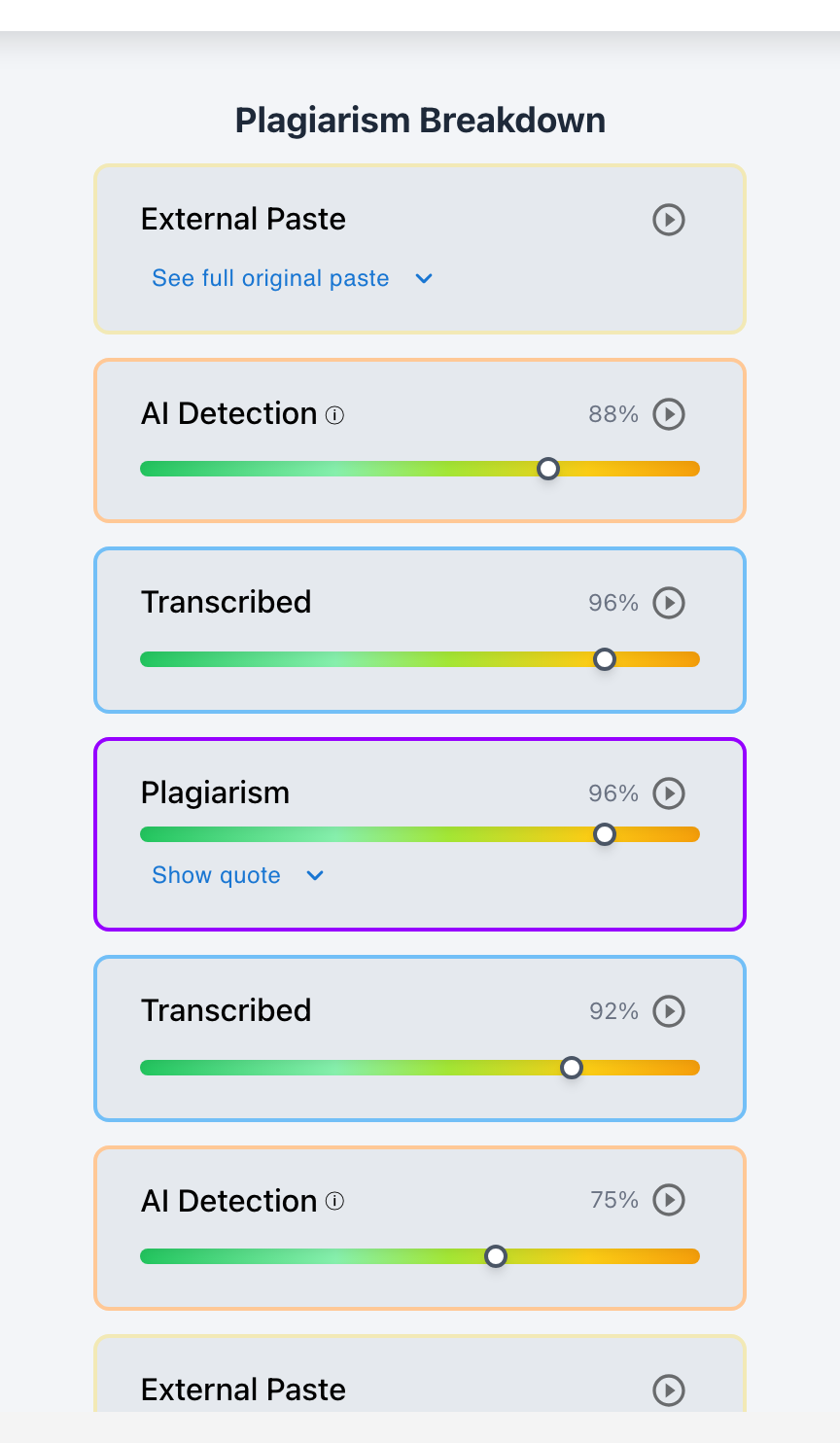
Checkmark Plagiarism streamlines process tracking by combining essay writing playback with AI detection, plagiarism detection, autograding, and integrations with Canvas and Google Classroom.
4 Practical Ways to Require Writing Process Evidence
1. Scaffolded Milestone Submissions
Break assignments into distinct checkpoints: topic proposal → annotated bibliography → rough draft → peer review → final essay.
2. In-Class Drafting Sprints
Dedicate 20–30 minutes of class time for students to draft introductions or outlines directly within the LMS editor, establishing authentic baselines.
3. Metacognitive Process Cover Letters
Require a mandatory 1-page memo where students explain two major structural changes made between the first draft and the final submission.
4. Automated Essay Writing Playback
Use writing playback to verify multi-session active drafting and eliminate overnight wholesale copy-paste shortcuts automatically.
How to Structure Your Rubric for Process Evidence
To ensure students take process requirements seriously, allocate 20–30% of the assignment grade directly to drafting milestones and documented revision:
Sample 100-Point Process-Integrated Rubric:
- Thesis Proposal & Working Outline (10 pts): Submitted on time with clear argument structure.
- Annotated Bibliography (10 pts): 3 verified academic sources with student evaluation notes.
- Rough Draft & Peer Workshop (10 pts): Substantive drafting with evidence of peer critique.
- Process Cover Memo & Playback (10 pts): Reflection on revision choices and verified keystroke history.
- Final Essay Quality & Analysis (60 pts): Argumentative depth, clarity, organization, and mechanics.
How Essay Writing Playback Automates Process Verification
Requiring process evidence should not double a teacher's grading time. With Checkmark Plagiarism's essay writing playback, verifying process history takes seconds:
- Active Drafting Summary: Displays total active typing hours vs. idle document time directly on the grading screen.
- Accelerated Video Replay: Watch a 10-second visual replay of how paragraphs and arguments evolved over multiple sessions.
- Instant Paste Flagging: Highlights wholesale paste events and external text insertions automatically.
Read more in how Checkmark writing process analysis works.
Sample Syllabus Language: Requiring Process Evidence
Clear Syllabus Policy Clause:
"In this course, writing is assessed as an iterative developmental process. All essays must be composed directly within our designated LMS document editor with writing playback active. Submitting a final paper without prior milestone submissions, rough draft logs, or verifiable typing history will result in a 0 for the process portion of the rubric and require an in-person oral defense before credit is awarded."
A 5-Step Educator Protocol for Implementing Process Requirements
Implementation Checklist for Teachers:
- 1. Publish clear process expectations and milestone dates in the assignment prompt.
- 2. Allocate 20–30% of the total rubric points specifically to process milestones.
- 3. Schedule one brief in-class writing session to establish initial outlines and baselines.
- 4. Require a 200-word cover memo detailing two specific revisions made during drafting.
- 5. Review essay writing playback summaries in Canvas or Google Classroom during grading.
How Checkmark Plagiarism Makes Process Grading Effortless
Checkmark Plagiarism combines **AI detection, essay writing playback, static AI detection, plagiarism detection, autograding, and Canvas/Google Classroom integrations** to turn process tracking into an automated, one-click grading workflow.
Frequently Asked Questions
Why should teachers grade the writing process rather than just the final product?
Grading the process fosters authentic writing habits, eliminates last-minute procrastination, and makes unauthorized generative AI shortcuts ineffective.
How much of the grade should be allocated to process?
Allocating 20–30% of the total assignment grade to outlines, drafts, and revision logs provides strong incentive without overshadowing final writing quality.
Does requiring process evidence increase teacher grading time?
Not with automated tools like Checkmark Plagiarism, which track active drafting time and keystrokes automatically inside your LMS grading view.
What is a metacognitive cover memo?
A short student reflection explaining how their thesis evolved, which paragraph was hardest to write, and what specific revisions they made between drafts.
What if a student writes their paper offline in Microsoft Word?
Instruct students to save intermediate drafts with version metadata or complete major drafting sessions within the integrated LMS editor.
How does writing playback prove an essay wasn't generated by AI?
Playback captures hours of continuous keystrokes, typing pauses, deletions, and iterative revisions that are impossible to simulate with an external AI paste.
What should a teacher do if a student submits a final essay with no process history?
Check for wholesale paste events, review cited sources in academic databases, and invite the student to discuss their drafting choices in a conference.
How do in-class drafting sprints help?
Spending 20 minutes in class drafting outlines establishes an authentic baseline of student voice and kickstarts progress on major papers.
How does process tracking protect honest students?
Honest students have an unassailable record of early notes, drafts, and typing timelines, completely protecting them from false AI accusations.
How does Checkmark Plagiarism integrate with Canvas and Google Classroom?
Checkmark Plagiarism embeds visual writing playback timelines, milestone tracking, and dual AI/plagiarism scans directly inside your LMS.
Celebrate the Journey of Writing
Writing is not an instantaneous transaction; it is a process of discovery, critical thinking, and refinement. By requiring and rewarding the writing process, educators empower students to find their authentic voices while upholding unwavering academic standards.
Checkmark Plagiarism supports this comprehensive approach with AI detection, essay writing playback, static AI detection, plagiarism detection, autograding, and integrations with Canvas and Google Classroom.
See how Checkmark pairs essay writing playback with multi-signal detection to make writing process requirements effortless to track and grade. View a sample report or request a demonstration.