
For an AI detection tool, FERPA compliance means operating strictly under the "School Official" legal exception—maintaining direct institutional control over student coursework, executing a binding Data Privacy Agreement, contractually prohibiting secondary commercial use or AI model training, and encrypting student records end-to-end.
The Family Educational Rights and Privacy Act (FERPA, 20 U.S.C. § 1232g) is the foundational federal law protecting the privacy of student education records in the United States. In modern digital classrooms, student essays, draft revision logs, and teacher feedback comments are legally classified as protected educational records. If an edtech vendor accesses this information without meeting strict FERPA criteria, the school district risks severe federal regulatory penalties, loss of federal funding, and civil liability. Understanding what true FERPA compliance entails is vital for school boards, superintendents, and IT leaders.
Below is a comprehensive legal and technical analysis of FERPA compliance in AI detection software.
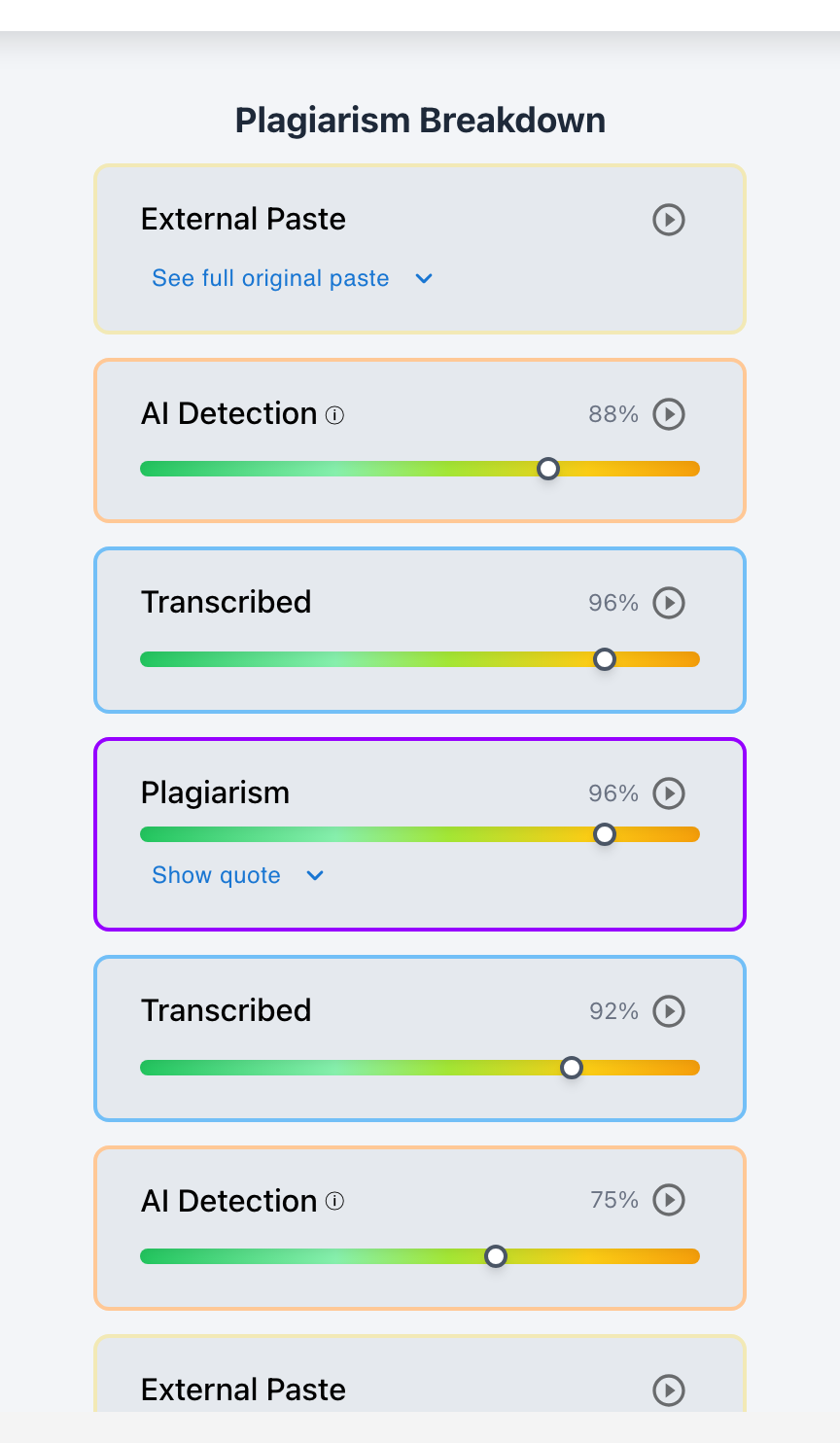
Checkmark Plagiarism maintains certified FERPA compliance while pairing AI detection with essay writing playback, plagiarism detection, autograding, and integrations with Canvas and Google Classroom.
The 4 Legal Pillars of FERPA Compliance in EdTech
1. The "School Official" Designation
The vendor performs an institutional service the school would otherwise perform itself, operating under the "direct control" of the school district.
2. Zero Secondary Use or Commercialization
The vendor is legally barred from using student essays for any purpose other than providing the contracted service—prohibiting targeted ads, user profiling, and AI model training.
3. Right of Inspection and Due Process
Parents and eligible students maintain the right to inspect all integrity reports, writing telemetry logs, and score dossiers maintained by the vendor.
4. Reasonable Security & Data Governance
Mandates physical, administrative, and technical safeguards—including AES-256 encryption at rest, TLS 1.3 in transit, and role-based access control.
Why Consumer AI Checkers Violate FERPA
Public web tools fail almost every legal requirement under FERPA:
- No Direct Institutional Control: Free online scanners have no legal contract with the school district; the district has no authority to audit or command data deletion.
- Unauthorized Re-Disclosure: Consumer sites often share uploaded data with advertising networks, third-party analytics trackers, and public LLM training datasets.
- Unilateral Terms of Service: Consumer sites can alter their data policies at any time without notifying school administrators or parents.
Read more in how Checkmark writing process analysis works.
Comparison: Non-Compliant Consumer Tools vs. Checkmark FERPA Architecture
Consumer Web Checkers (FERPA Violations)
- No signed Data Privacy Agreement (DPA).
- Student work ingested for commercial AI training.
- No student/parent inspection or correction rights.
- Exposes school district to federal privacy penalties.
Checkmark Plagiarism (100% FERPA Compliant)
- Signed institutional DPA under School Official rule.
- Strict contractual ban on secondary data use & AI training.
- Transparent playback dossiers accessible for student due process.
- Enterprise AES-256 encryption and isolated tenant storage.
A 5-Step Compliance Protocol for District Leaders
FERPA Compliance Checklist:
- 1. Require vendors to sign the state or national Student Data Privacy Agreement (NDPA).
- 2. Ensure the contract formally establishes the vendor as an authorized "School Official."
- 3. Verify that student submissions are never used to train public or proprietary AI models.
- 4. Ensure students and parents can inspect writing playback dossiers during academic reviews.
- 5. Prohibit staff from uploading student essays to unapproved third-party websites.
How Checkmark Plagiarism Powers FERPA Compliance
Checkmark Plagiarism combines **AI detection, essay writing playback, static AI detection, plagiarism detection, autograding, and Canvas/Google Classroom integrations** while providing school districts with guaranteed FERPA compliance and enterprise data governance.
Frequently Asked Questions
Are student essays protected by FERPA?
Yes. Student essays, drafts, revision histories, and teacher grading notes created for course assignments are legally classified as protected education records under FERPA.
What is the 'School Official' exception under FERPA?
It allows schools to share education records with third-party software providers without prior parental consent, provided the vendor operates under the direct control of the district for legitimate educational purposes.
Does Checkmark sign district Data Privacy Agreements?
Yes. Checkmark regularly executes state and national Data Privacy Agreements (including NDPA templates) with school districts across the country.
Can students or parents inspect their Checkmark integrity reports?
Yes. In accordance with FERPA inspection rights, Checkmark allows teachers to export or share complete writing playback and similarity dossiers with students and parents.
Does Checkmark use student records for commercial advertising?
No. Checkmark never sells, rents, or uses student information for advertising, profiling, or commercial marketing.
How does Checkmark Plagiarism integrate with Canvas LMS?
Checkmark provides certified LTI 1.3 integration, SpeedGrader sidebar embeds, two-way grade passback, and single sign-on (SSO).
What happens if a student requests their data be deleted?
Under FERPA and district policy, Checkmark provides institutional administrators with tools to permanently purge student records upon request.
Is student data encrypted in Checkmark?
Yes. Checkmark enforces enterprise-grade AES-256 encryption at rest and TLS 1.3 encryption in transit for all student coursework.
Can teachers upload student work to ChatGPT or free detectors legally?
No. Uploading student essays containing identifiable information to uncontracted commercial AI tools violates FERPA regulations.
Why is Checkmark the gold standard for FERPA compliance?
Because Checkmark pairs industry-leading multi-signal detection with ironclad legal guarantees, transparent parent inspection tools, and enterprise security.
Upholding Student Privacy Rights with Integrity
Educational integrity begins with respecting student privacy and federal law. By deploying Checkmark Plagiarism under certified FERPA protections, district leaders ensure that student data is safeguarded with the highest legal, technical, and ethical standards.
Checkmark Plagiarism supports this comprehensive approach with AI detection, essay writing playback, static AI detection, plagiarism detection, autograding, and integrations with Canvas and Google Classroom.
See how Checkmark pairs certified FERPA compliance with multi-signal detection to protect student records inside your LMS. View a sample report or request a demonstration.